

Special Collections and Archives > University Archives > Highlights of Cal Poly History
Of Cal Poly’s many campus traditions, perhaps the best known and loved is Open House, formerly known as Poly Royal, the annual campus event that celebrates the university’s learn-by-doing philosophy.
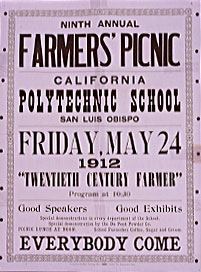
Open House’s origins lie in the Farmers’ Institute and Basket Picnic, the first open house event on campus, which was held May 24, 1904. The founders of the California Polytechnic School decided to “hold a monster picnic at the school in early May when noted educators and prominent citizens will address the people.” More than 200 visitors attended that first Farmers’ Picnic, touring the school’s new buildings, eating barbecue, and listening to a speech by Trustee E. J. Wickson, a member of the agricultural faculty at the University of California at Berkeley.
By 1908, the Biennial Report of the Board of Trustees noted, “The day is now looked upon as an established feature of the school year, furnishing as it does excellent opportunity for ‘extension work’ in agricultural education among residents of a large community.” Two years later, the Farmers’ Institute was so popular that the Pacific Coast Railway offered reduced fares, which lured more than 800 visitors. In 1913, over 3,000 persons attended the Farmers’ Institute, which was joined with celebrations of the school’s first ten years of operation. The combined Farmers’ Institute and Decennial celebration featured a barbecue, a pageant of San Luis Obispo history, and commencement ceremonies for the class of 1913. By the 1920s, however, the Farmers’ Institute had disappeared, perhaps a victim of funding uncertainties during this period.
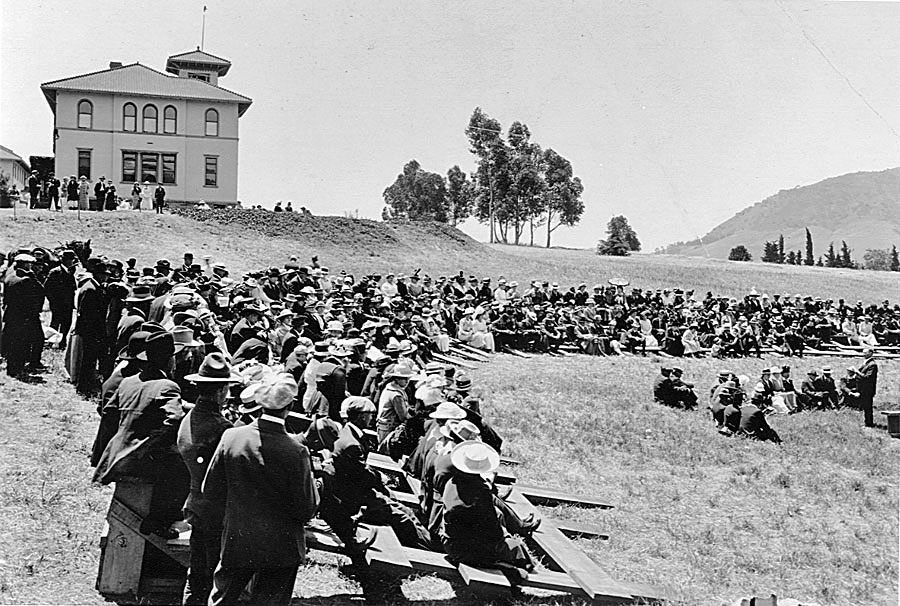
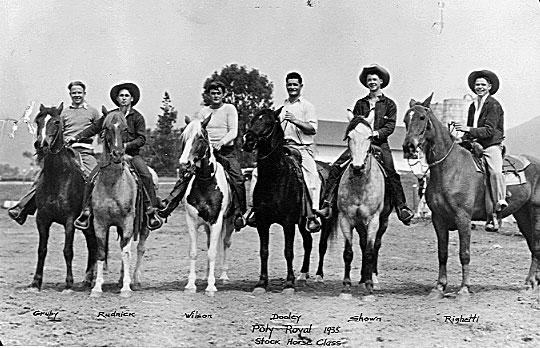
On March 31, 1933, “hundreds of visitors from the coast counties and the San Joaquin valley thronged the California Polytechnic campus for the first annual Poly Royal agricultural show,” reported the San Luis Obispo Daily Telegram. The 1933 El Rodeo yearbook enthusiastically described that sunny Friday’s program of events:
One of the greatest products of a showman’s hand was featured by the Agricultural Division in the form of the Poly Royal. The day was begun with a big stock parade. Stock judging continued throughout the day, and those in attendance at the show were given the privilege to inspect all the agricultural equipment and to view exhibits of farm projects. A well-prepared barbecue, held in Poly grove, constituted the noon meal for campus residents and others. Climaxing the great day came the Poly Royal dance in Crandall gymnasium. The setting was perfect and the music, by the Paramount Dance orchestra, equally as good. All of the day and evening were well attended.
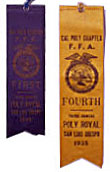
Other popular events held at the first Poly Royal included horticulture judging, tours of the industrial shops, a baseball game, and presentations of awards.
Poly Royal differed from previous campus events because of its role as one of Julian McPhee’s strategies for reinvigorating the college. Earlier campus events were similar to the Chautauquas popular at that time, with an emphasis on lectures from leading citizens and dignitaries. From its inception, Julian McPhee intended Poly Royal as the popular embodiment of Cal Poly’s learn-by-doing philosophy, with its livestock and horticultural exhibitions and student project showcases offered to visitors as proof of the effectiveness of vocational education.
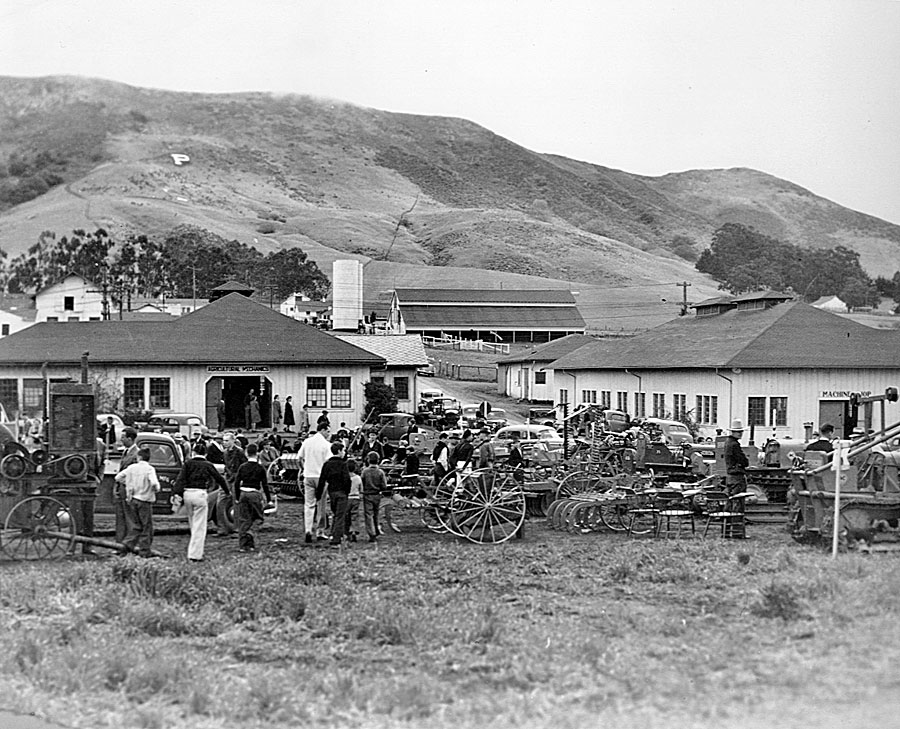
The second annual Poly Royal expanded to two days of celebration, offering visiting parents, alumni, prospective students and other visitors an increasing number of the school’s programs and student achievements. In addition to its promotional aspects, the Poly Royal quickly became a high point in the campus social calendar. “Among the important school events are the annual Homecoming, Christmas party, May Day picnic, and the Poly Royal agricultural show,” noted a 1934 student recruitment brochure entitled Your Vocational Opportunity.
In 1940, one of the original faculty organizers of the event, Carl “Gus” Beck, told a student reporter, “From the start the show met with public approval and has grown larger each year. Three years ago the constitution of the Associated Students was amended to enable Poly Royal to be an activity of the entire student body. Each year another event has been added to the list of Poly Royal events. Last year it was the student rodeo and this year came the relays…” The 1944 event was downsized to a single day, while the 1945 Poly Royal was cancelled altogether due to gas rationing and other war-time restrictions.
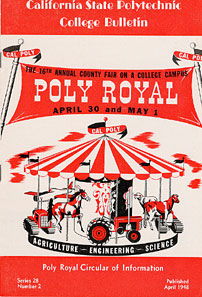
With the war over, the annual “Country Fair on a College Campus” resumed its full schedule of events. Annual themes were often developed for the event, and guests of honor were chosen from among state officials, emeriti faculty, agricultural leaders, and other supporters of Cal Poly. In addition, as its reputation grew, Poly Royal actively targeted visitors and industry representatives statewide. The 1950 program announcement invited visitors to “come to San Luis Obispo, Heart of the Mission Trails and Home of the California State Polytechnic College” and promised “you’ll have a wonderful time.” President McPhee wrote, “For the 18th year it is a great pleasure to invite parents, alumni, and Cal Poly’s many other friends to enjoy with us another Poly Royal celebration. I am proud of Poly Royal and of our students and faculty whose united efforts so vividly portray the unusual educational opportunities at this college. May we count on your coming?”
A popular custom was the selection of the Poly Royal Queen and her attendants, who reigned over the annual festivities. Jane Horton Bailey of San Luis Obispo was voted the first Poly Royal Queen at the second annual Poly Royal in 1934. During Cal Poly’s years of all male enrollment, queens were chosen each year from area high schools or other colleges within the state.
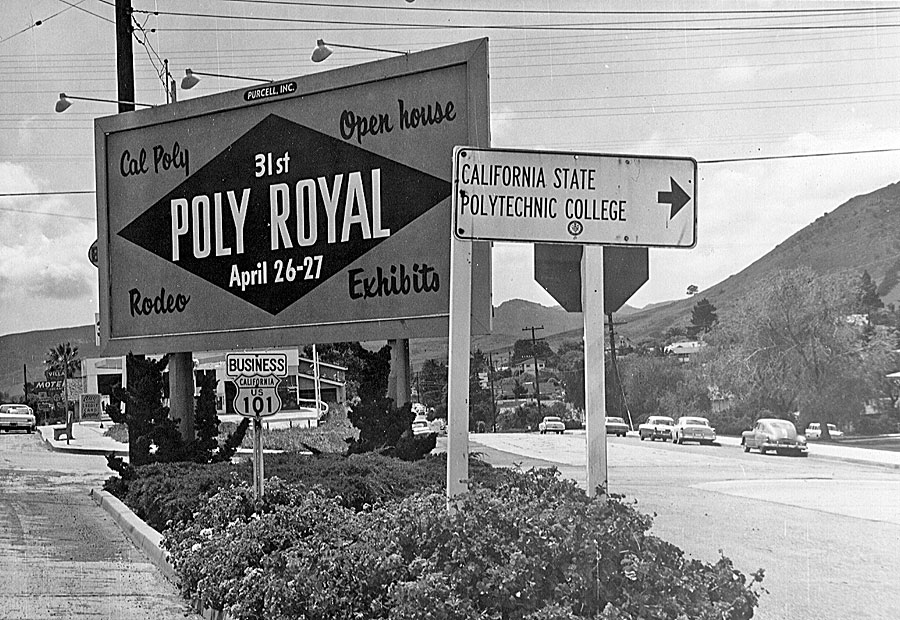
Through the years, the exhibits evolved as the curriculum did, adding architectural designs and landscaped model houses, rodeo competitions, home economics fashion shows and more to highlight the results of student work accomplished during the academic year.
In keeping with the traditional theme of a “country fair,” Poly Royal has also offered many crowd-pleasing activities that attracted locals and students alike. Cow milking contests, nail-driving competitions, and the milk can roll were open to the public, while the famous tractor pull, pole-climbing competition, and rodeo were limited to student entrants. Student organizations, peddling a wide array of food, t-shirts and other commemoratives to the crowds, used their Poly Royal profits to bankroll their activities.
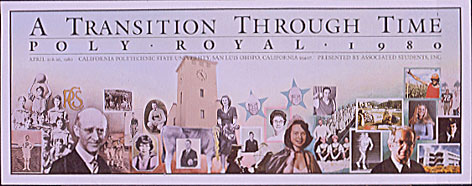
In 1990, Poly Royal became of a victim of its own success when an unruly crowd of over 1,000 gathered near campus on Friday night, April 27. They threw rocks and beer bottles, overturned cars, and vandalized stores and residences along California Boulevard until they were subdued by police. Arrests were made and a reexamination of the event began. Authorities cited out-of-town revelers, alcohol abuse, and the crowds of more than 100,000 swelling the campus and town for the celebration as factors contributing to the mêlée.
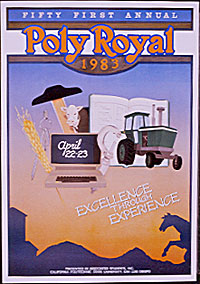
After much soul-searching and discussions with police and community groups, President Warren Baker called for a “reassessment of Poly Royal.” Further celebrations were put suspended until 1994, when campus and community leaders gave their approval to Open House, a much smaller version of the traditional event that returned the focus to student programs and accomplishments. With the success of six Open House celebrations, President Baker reinstated Poly Royal in 2001 as part of the university’s centennial celebrations.
As Cal Poly looks to the future, Poly Royal is once again celebrated as the incarnation of both the university’s history and its “learn-by-doing” educational philosophy.
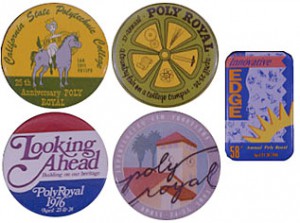
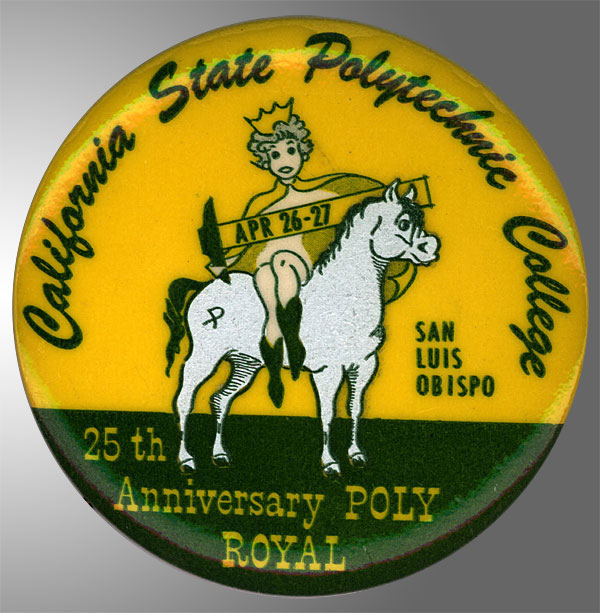
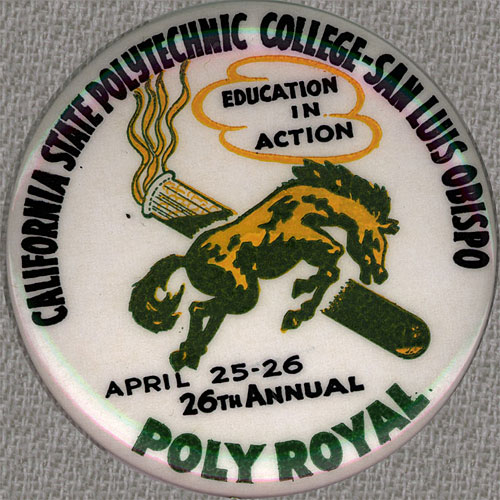
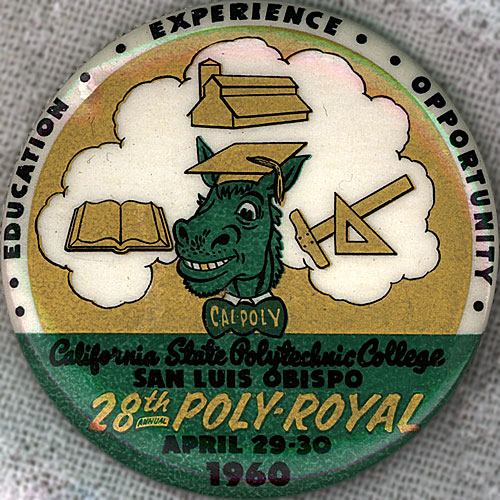
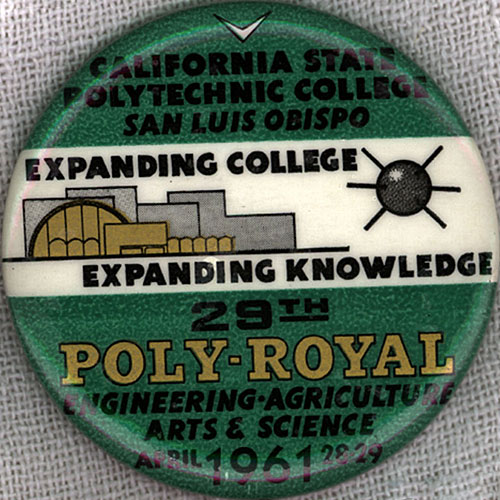
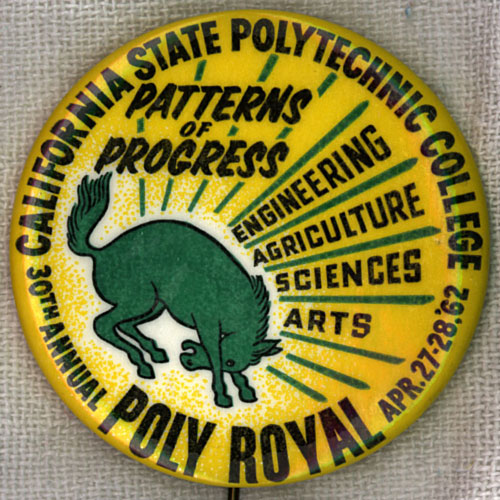
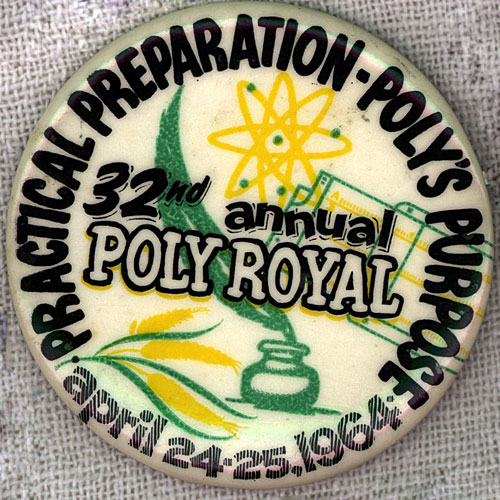
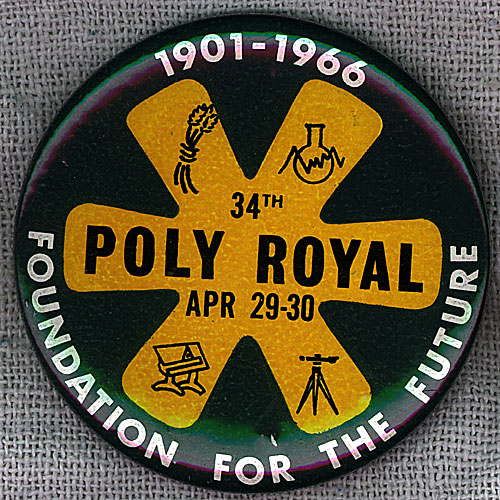
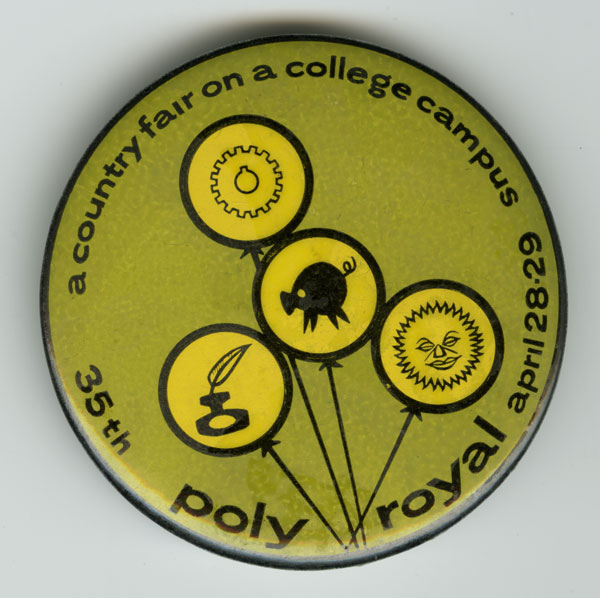
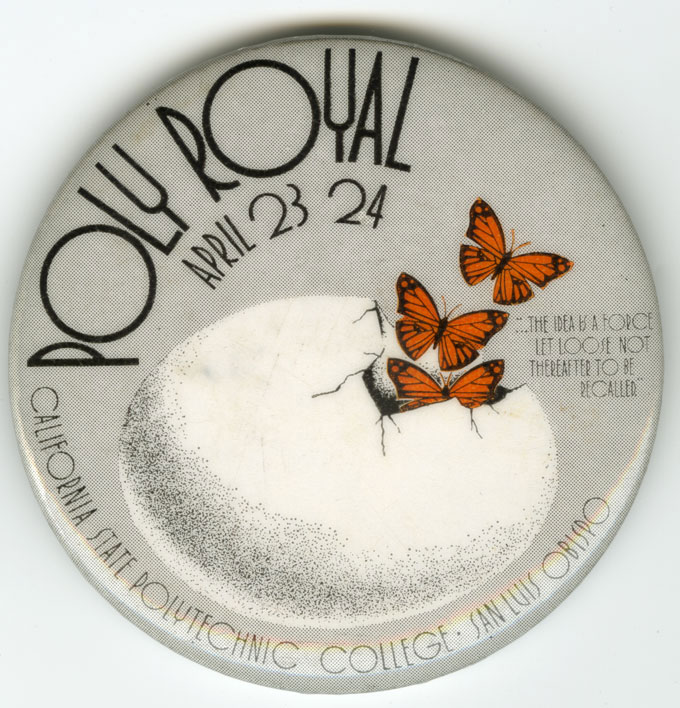
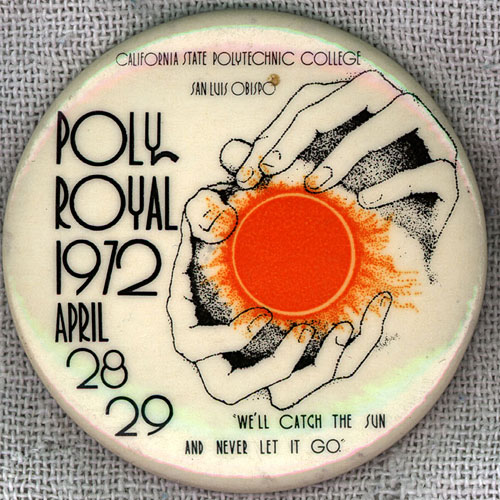
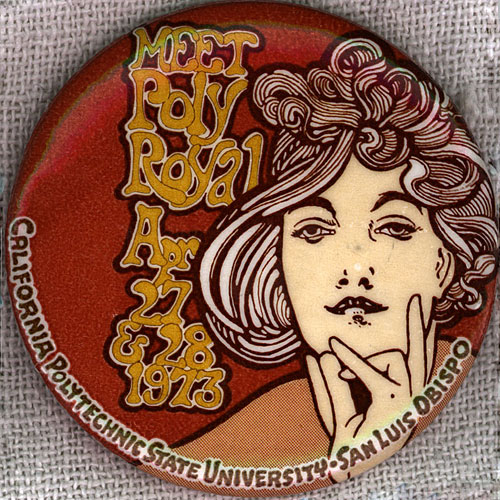
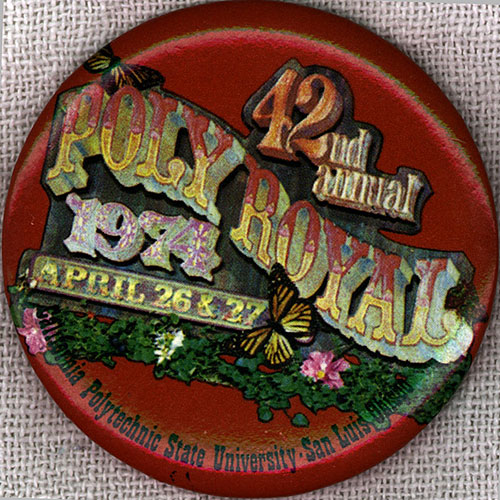
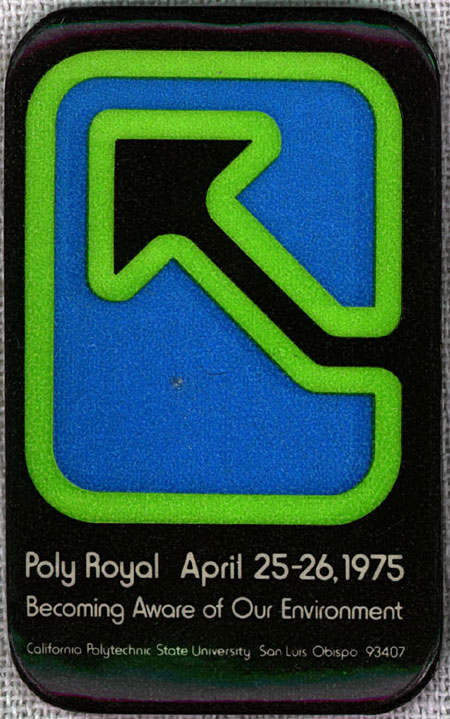
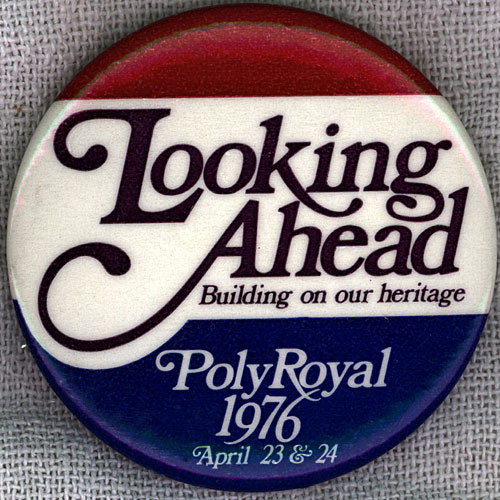
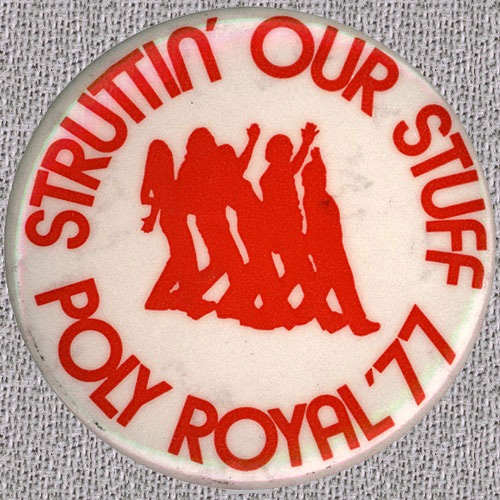
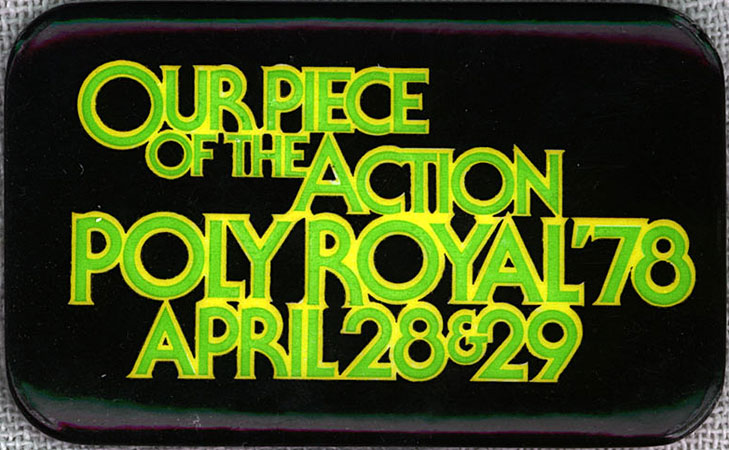
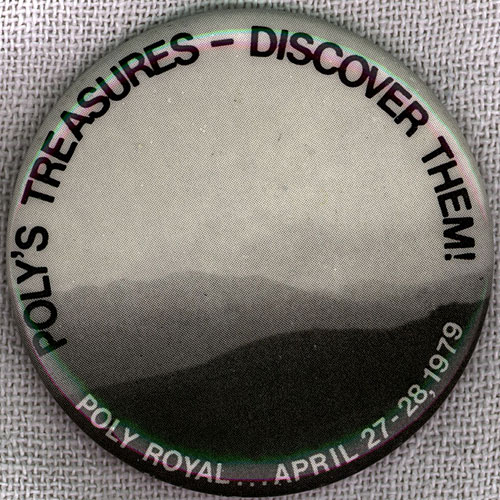
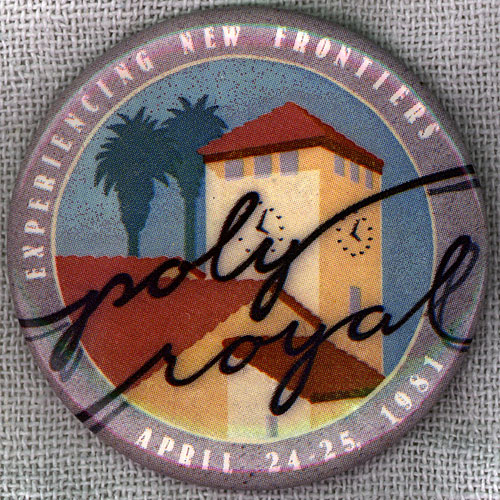
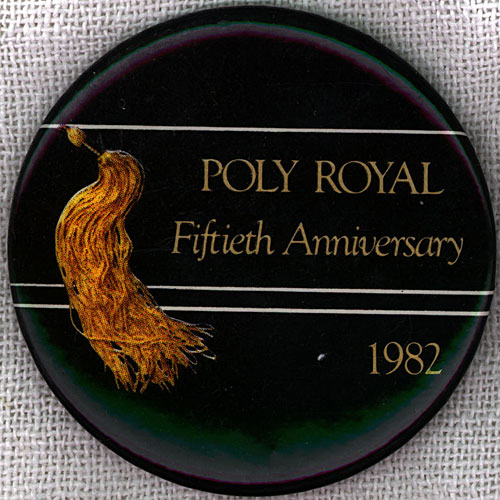
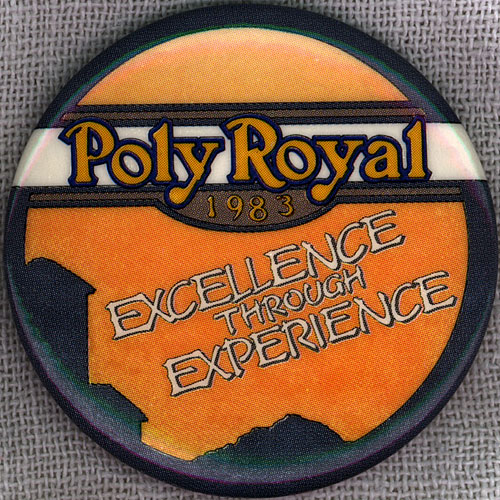
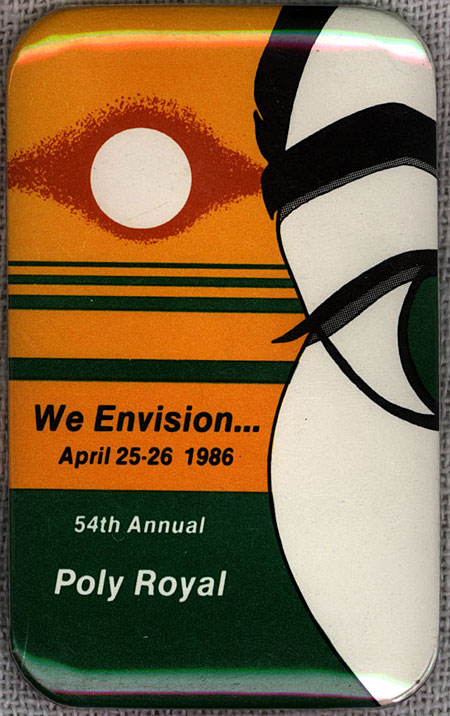
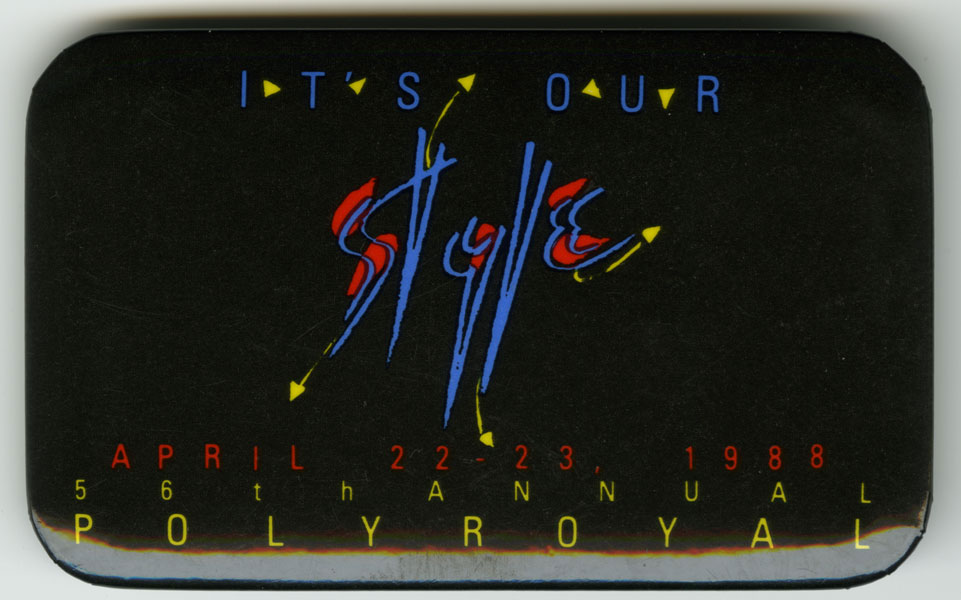
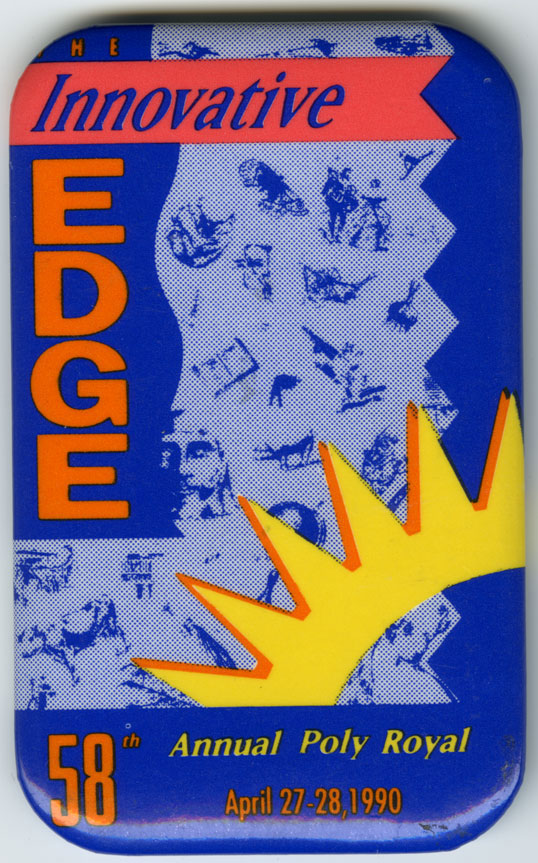
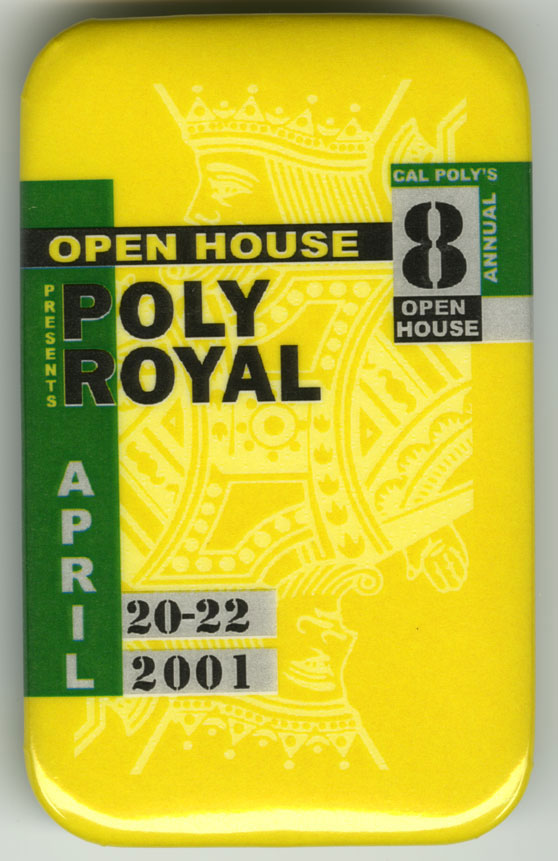
Poly Royal buttons were first introduced in 1958 by the Cal Poly Collegiate Future Farmers of America. Dale Andrews, the CFFA advisor, who would go on to become vice president and acting president at Cal Poly, got the idea from the University of Minnesota while studying for his doctorate degree. He observed that the clubs there raised funds by selling buttons. He initiated the idea at Cal Poly, and students found a new way to raise money, support and promote Poly Royal, and work on projects.
The original button, the Poly Royal Queen holding a T-square while sitting on top of a horse, represented the three divisions at Cal Poly in 1958 — agriculture, engineering and math. The first square button appeared in 1975. In the beginning buttons were limited to the colors green and gold, but have over the years been created in a variety of colors.